FB Fanning BayouWeather Desk
BAYOU ALERT

Bayou Operations Center · Swamp Tracker

Today's Swamp Level

Reading…

Measuring the dew point, which is the honest answer to "why does the air feel like a wet dog."

Updated just now · official reading from the swampier station

The only weather desk that reads two gauges on one street, tells you whether to water the grass, and grades the air on a scale that ends at Full Swamp.

Dry
Tolerable
Sticky
Muggy
Soup
Full Swamp

Graded on dew point: under 55°F is dry, 75°F and up is Full Swamp. Down here it is mostly the second one.

The neighborhood stations

Reading the gauges…

days since it was actually dry. Counting from the last time the dew point dropped below 55°F. This number only goes up. We have made our peace with it.

Live radar over the bayou

Warming up the radar…

Light Heavy reflectivity, the scale every radar uses

Radar frames from RainViewer, refreshed every few minutes; base map © OpenStreetMap contributors © CARTO. The dot is our street. Frames past the present are the short-range nowcast and are labeled as such.

The outlook

Consulting the government…

The rain ledger

Opening the ledger…

Grass vs Grass: the bayou face-off

Reading the rain gauges…

Consulting the Bureau…

Swamp’s Most Wanted

The repeat offenders in a Panhandle lawn. Mugshots, distinguishing features, last known methods of removal.

Bayou Oversight Committee · Turf Enforcement Division

Most Wanted

Four subjects at large. Considered established. Approach with a label.

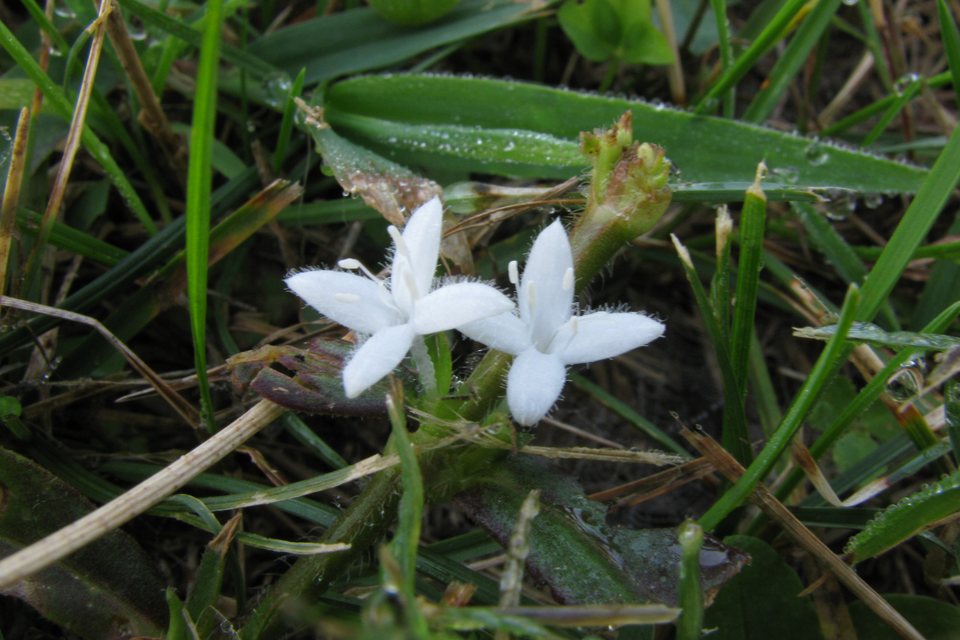
Virginia buttonweed (Diodia virginiana), white four-pointed star flowers at the leaf joints, growing down in turf At large BOC-2026-0817 · BUTTONWEED, VIRGINIA

Virginia Buttonweed

Diodia virginiana

Aliases
Buttonweed. Files as an annual in conversation and a perennial in fact.
Wanted for
Matting flat over thin centipede. Regrowing from every root fragment left behind by a hand pull.
Last seen
Wet low ground and valve-box corners, in any yard watered light and often.
Marks
Opposite leaves clasped straight to the stem with no stalk. White flowers in four-pointed stars, where leaf meets stem. Foliage often mottled yellow from a virus it carries.
If apprehended
Spring, on tender new growth. By late summer the plant shrugs off what would have worked in April. Metsulfuron alone only rates fair on it, 70 to 79 percent, and centipede caps that product at 0.5 oz per acre. Celsius rates 80 to 100 percent and is listed safe on centipede at label rates. Add a non-ionic surfactant at 0.25 percent by volume, then stop watering light and often.
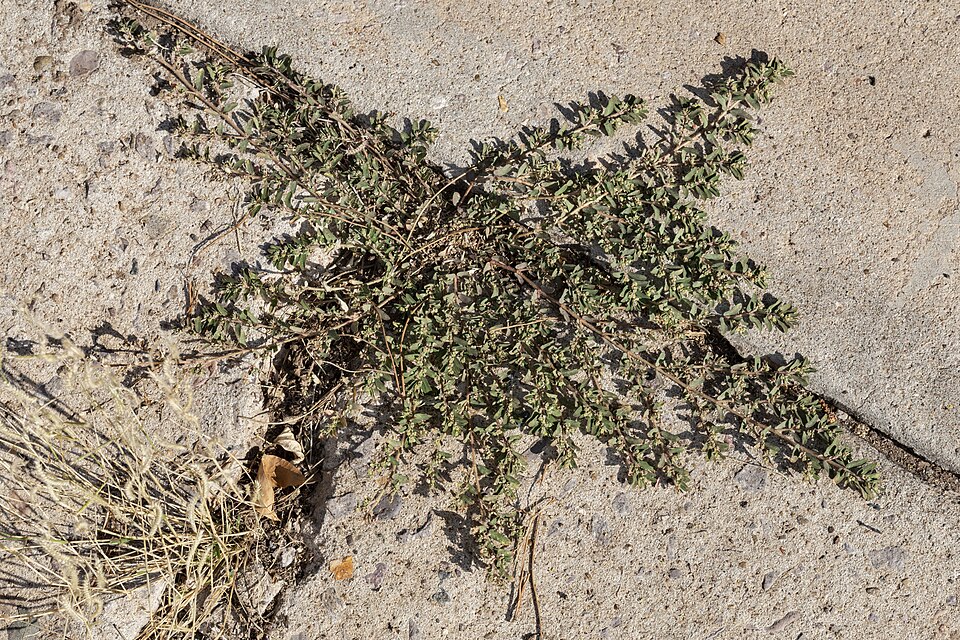
Spotted spurge (Euphorbia maculata), a flat mat of paired leaves on reddish stems At large BOC-2026-0114 · SPURGE, SPOTTED

Spotted Spurge

Euphorbia maculata

Aliases
Prostrate spurge. Filed some years as Chamaesyce maculata.
Wanted for
Occupying bare sand. Loitering along hot driveway edges. Germinating all summer while you wait for spring.
Last seen
Full sun, compacted sand, any patch the grass already surrendered.
Marks
Flat mat radiating from one central taproot. Small paired leaves, often a dark blotch. Snap a stem and it bleeds milky white.
If apprehended
Pull the whole mat by that central root while it is young, gloves on, the sap irritates skin. Pre-emergent in spring. Listed on the Celsius label at the low rate, 0.057 oz per 1,000 sq ft.
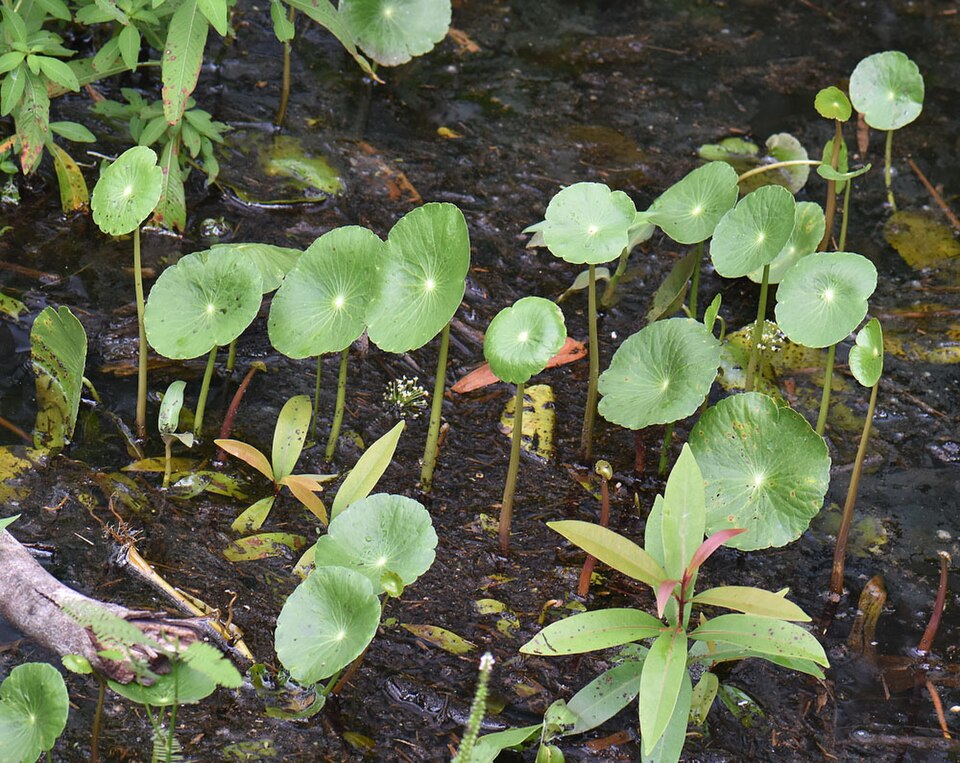
Dollarweed (Hydrocotyle umbellata), round coin-shaped leaves with the stem attached at the center At large BOC-2026-0207 · DOLLARWEED

Dollarweed

Hydrocotyle umbellata

Aliases
Pennywort. Answers to nothing.
Wanted for
Impersonating a lily pad on dry land. Living entirely off your irrigation schedule.
Last seen
Low spots, valve boxes, downspout runs, any yard watered more than twice a week.
Marks
Round coin of a leaf with the stem attached dead center, glossy, held up on its own little stalk.
If apprehended
This is a water problem wearing a weed costume. Note the arithmetic on centipede: the metsulfuron label lists dollarweed at 0.5 to 1 oz per acre, and centipede tolerates at most 0.5 oz per acre. You are permitted the very bottom of the band and not one drop more. Turn the water down.
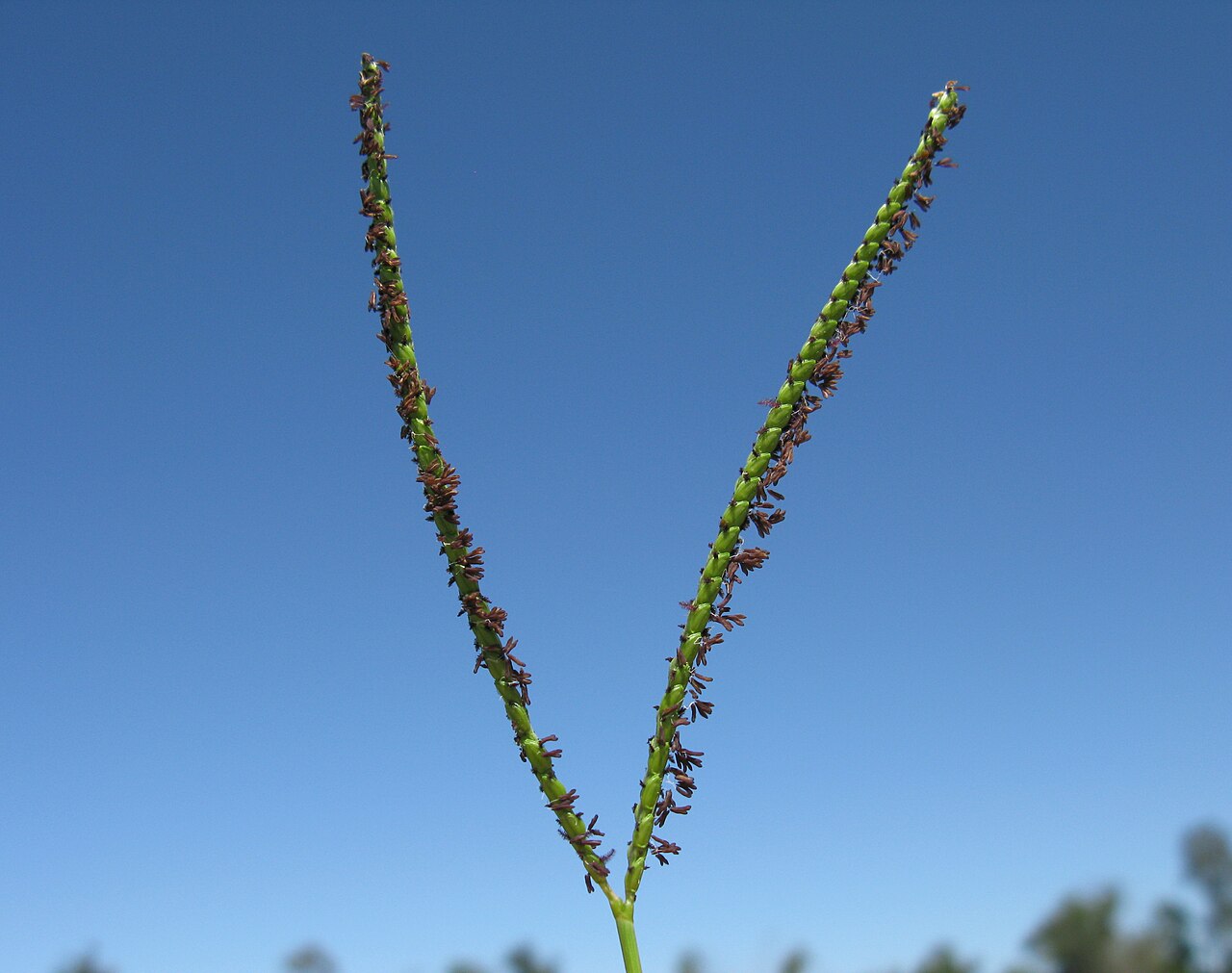
Bahiagrass (Paspalum notatum) seedhead, two spikes forming a V on a tall stalk At large BOC-2026-0311 · BAHIAGRASS

Bahiagrass

Paspalum notatum

Aliases
Pensacola bahia. Argentine bahia. Around here, that ugly grass.
Wanted for
Posing as lawn. Throwing seed heads back up within days of a mow. Dulling blades and calling it character.
Last seen
Road shoulders and thin centipede, spreading along whatever line the mower travels.
Marks
Two spikes in a narrow V on a tall bare stalk. Coarse, wide, tougher than everything beside it.
If apprehended
The window on centipede is narrow but real. Metsulfuron lists bahiagrass at 0.25 to 0.75 oz per acre, centipede tolerates 0.25 to 0.5, so the workable overlap is 0.25 to 0.5 oz per acre. The same label warns against using it where bahiagrass is the turf you wanted, which is exactly the trick being played on it.

Reward: none. It is a lawn. Rates above are read off the product labels, not off a forum post, and the label on the jug in your hand is the one that governs.

Also on the board

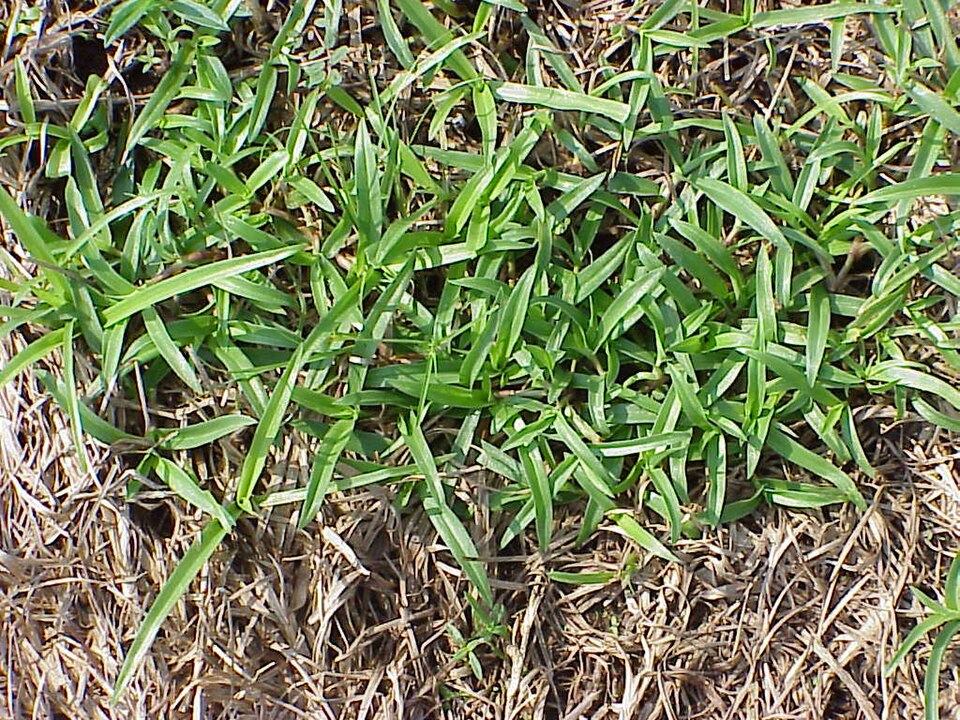
Crabgrass (Digitaria sanguinalis)

Crabgrass

Digitaria sanguinalis

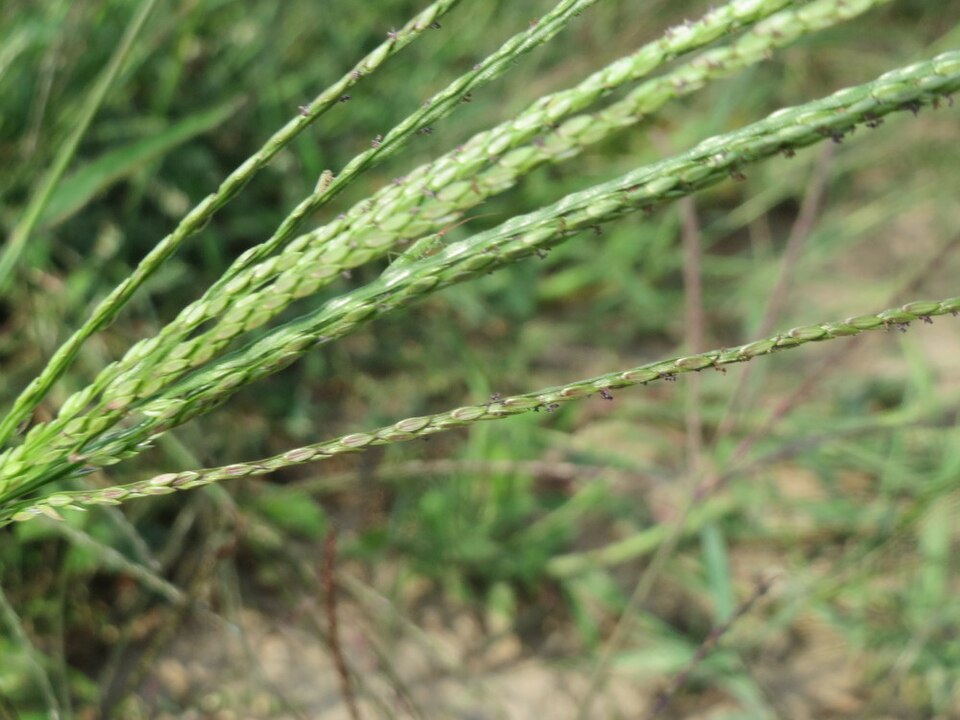
How to spot it. Sprawling star-shaped clump, wide pale blades, flat to the ground.

How to get rid of it. Pre-emergent in late winter is the whole game: once it is up, it is a season-long guest. Hand pull small clumps before they seed. Mow high, a thick lawn crowds it out.

Nutsedge (Cyperus rotundus)

Nutsedge

Cyperus rotundus

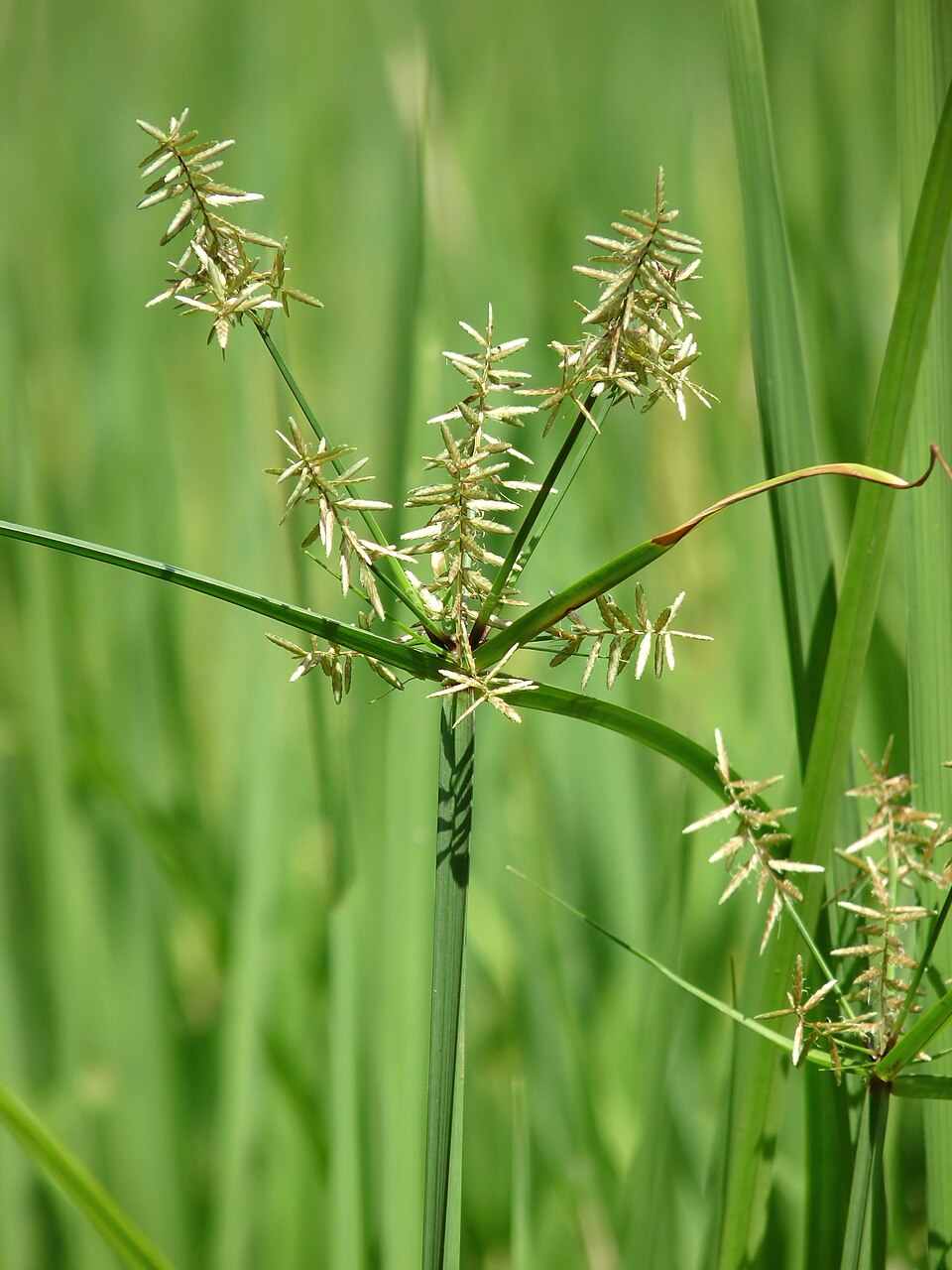
How to spot it. Bright yellow-green, grows faster than the lawn, triangular stem you can feel by rolling it.

How to get rid of it. Not a grass, so grass herbicides do nothing. Pulling leaves the nutlets behind and it comes back thicker. Needs a sedge-specific product (halosulfuron or sulfentrazone).

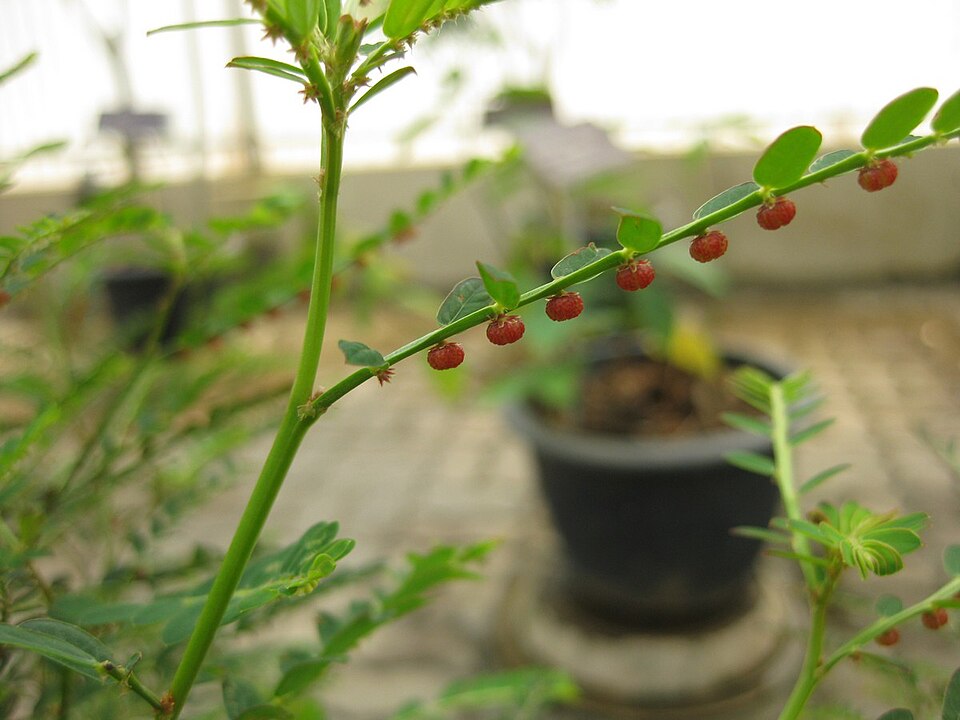
Chamberbitter (Phyllanthus urinaria)

Chamberbitter

Phyllanthus urinaria

How to spot it. Looks like a tiny mimosa seedling; the tell is a row of green warty fruits under each branch.

How to get rid of it. Pull it before those fruits ripen or you have seeded next year yourself. Pre-emergent in spring. It thrives in thin turf, so thicken the lawn.

Doveweed (Murdannia nudiflora)

Doveweed

Murdannia nudiflora

How to spot it. Thick rubbery blades that mat over the grass, late to show up, loves soggy ground.

How to get rid of it. One of the hardest here. Comes up late (May onward) so a single early pre-emergent misses it. Reduce watering, improve drainage, treat while it is small.

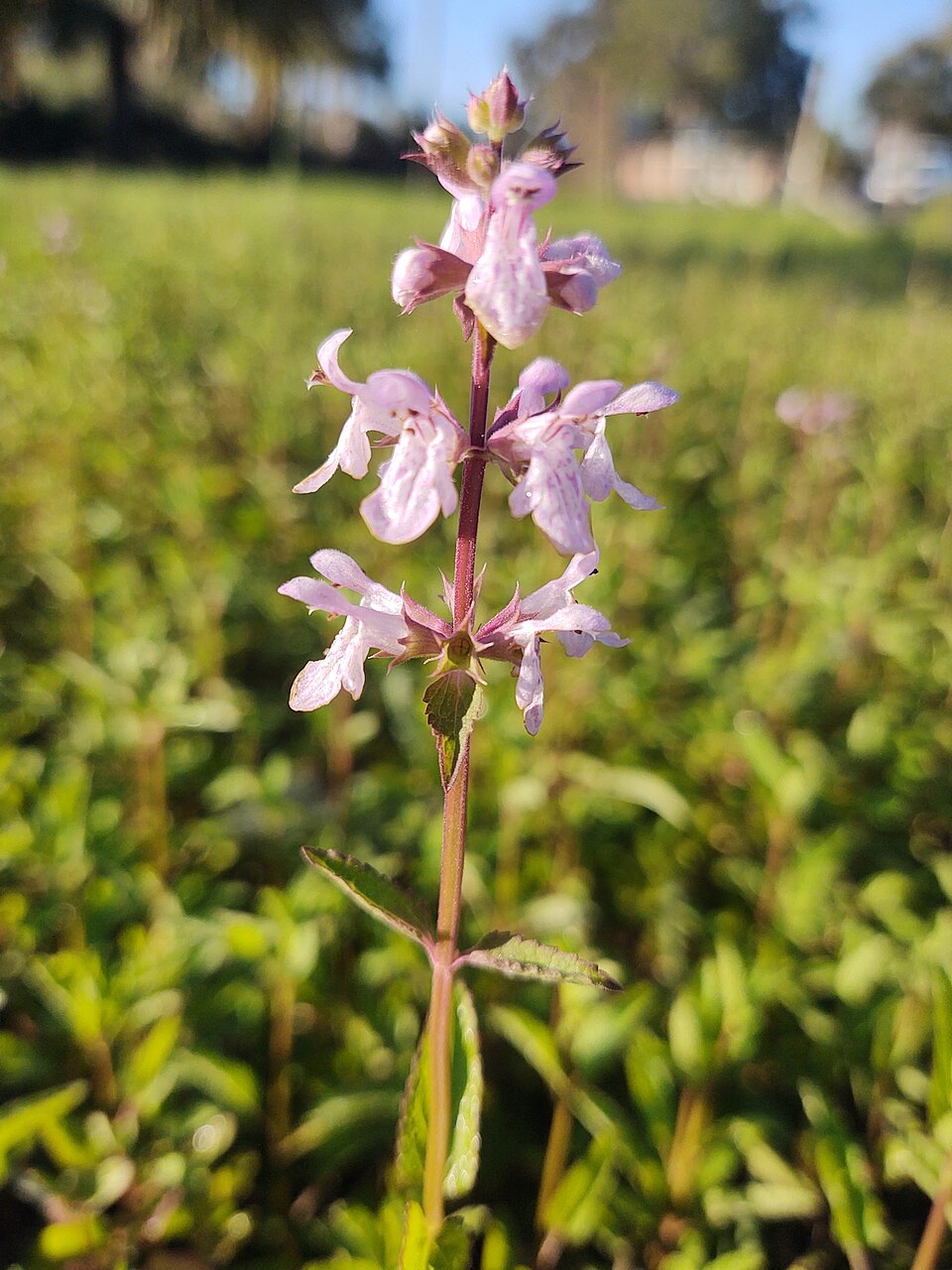
Florida Betony (Stachys floridana)

Florida Betony

Stachys floridana

How to spot it. Mint-square stem, pink tubular flowers, and a white segmented tuber underground that looks like a rattlesnake tail.

How to get rid of it. The tuber is why it laughs at pulling. Cool-season weed, so hit it in fall and winter, not August. A dense summer lawn suppresses it.

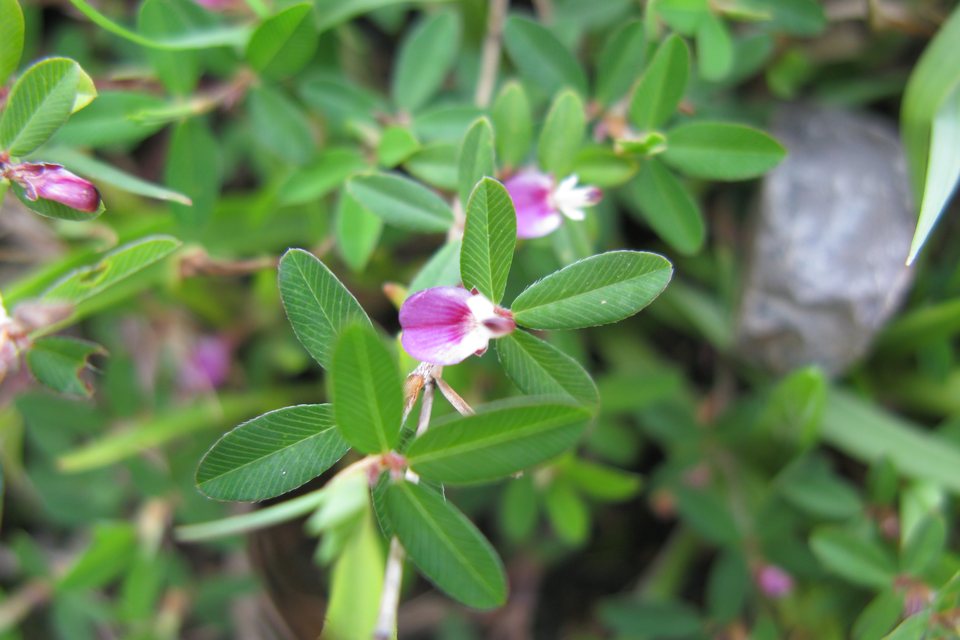
Common lespedeza (Kummerowia striata), three oblong leaflets with parallel veins and a small pink-purple pea flower

Common Lespedeza

Kummerowia striata

How to spot it. Goes by Japanese clover. Three smooth oblong leaflets with the veins running nearly straight across them, and tiny pink-purple pea flowers in the leaf joints.

How to get rid of it. Most spring pre-emergents give erratic results on it. Dithiopyr is the exception. Once it is up, atrazine and simazine both rate excellent and both are labeled for centipede. Stems turn woody by late summer and it hangs on, so go early and mow higher.

Read the label before anything goes in a sprayer. Centipede and St. Augustine are damaged by several common broadleaf products, and heat makes that worse, so the same bottle that saves a Bermuda lawn can wreck a centipede one. The Trimec Southern label adds: nothing on centipede during spring green-up, the stretch between dormancy and active growth. Control notes follow UF/IFAS, UGA and Clemson.

Mugshots via Wikimedia Commons: centipede (CC BY-SA 3.0) · zoysia (CC BY-SA 3.0) · staug (CC BY-SA 3.0) · bermuda (CC BY 2.0) · crabgrass (CC0) · dollarweed (CC BY 2.0) · nutsedge (CC BY-SA 4.0) · chamberbitter (CC BY-SA 3.0) · doveweed (CC BY-SA 3.0) · betony (CC0) · spurge (CC0) · bahia (CC BY 2.0) · buttonweed (CC BY-SA 3.0) · lespedeza (CC BY 2.0)

Special thanks

The weather is real. It comes off stations that neighbors bought, mounted, and keep running.

Thanks to KFLSOUTH73 and KFLPANAM574 on the street, and KFLPANAM600 out west. With their three powers combined, they power the swamp weather network.

Call signs, not names. That is how a station signs its own work, and it saves us guessing who goes by what.